A Planning Mindset for Cancer Care
How to think differently before you design
Cancer care requires endurance. Patients. Families. Staff. They must endure long stretches of highly stressful care because so much is at stake for everyone involved.
Planning oncology spaces requires a mindset grounded in empathy and sustainability. We have to ask how these spaces will impact people over the months and years they will play pivotal role in their lives.
Understanding the Patient’s Experience
In early planning, it’s easy to organize our projects into departments, adjacencies and operational flows. But it’s important to remember that patients don’t experience care that way. They experience it as a personal journey, made up of emotional moments that begin before stepping into treatment and continue long afterwards.
“We construct patient journeys not to understand the transactional steps of their treatment, but to understand the needs of patients as they experience each stage. It shapes how people perceive their care,” said Michael St. Clair, REES Healthcare Planner.
Patient-centered design emphasizes understanding the full ecosystem surrounding a patient. Their experience is shaped by the people, process, and place all working together.
“A well-designed oncology building should feel intuitive and responsive. Patients may not be able to articulate why a space is different, but they feel it. The building should participate in the care process by reducing uncertainty,” said Mark Henderson, REES Healthcare Project Manager.

Reducing Stress Before Care Begins
Patient anxiety often peaks before a patient ever checks in.
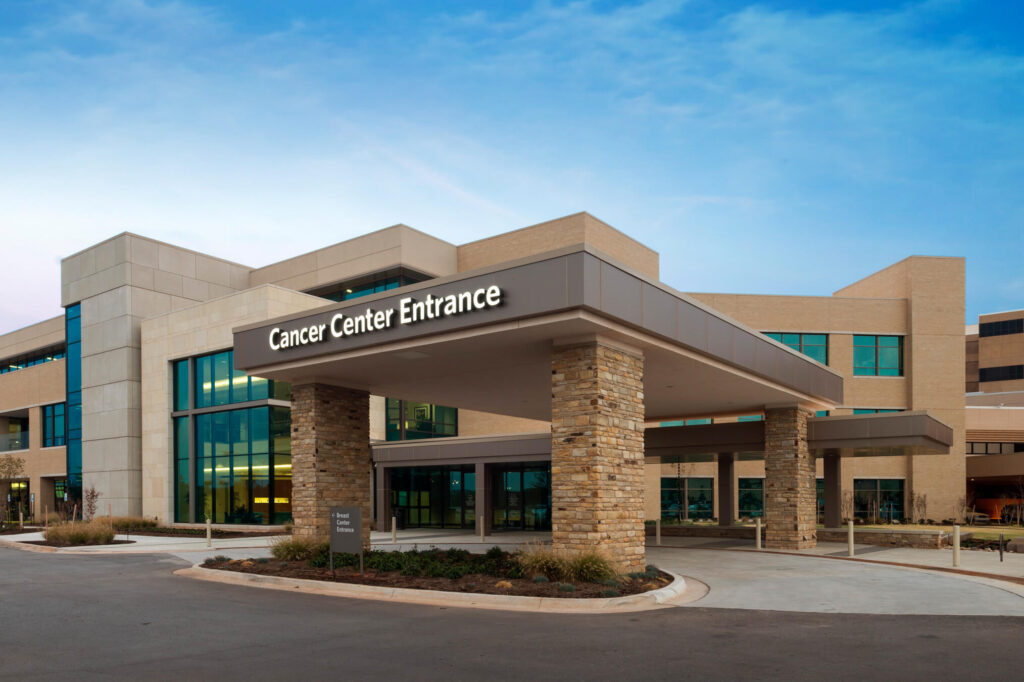
Mark describes the layered stress many patients experience. “Before a patient ever enters the building, they are already stressed about traffic in a large city, navigating an unfamiliar medical campus, finding the right building, locating parking and figuring out how to get inside. They aren’t in a state of mind to pick up on subtle visual clues.”
Intuitive clarity is vital, especially in cancer care environments that must support the patient’s emotional journey as much as their clinical care.
When Mark was designing MD Anderson’s Mays Clinic, the planning focused heavily on pre-visit communication and physical clarity. Elevators were aligned with primary arrival points. No matter the level, patients entered the same place. Once off the elevator, they immediately saw a person who could help them. Walking distances were minimized to simplify the transition from arrival into care.
“These decisions sound simple,” Mark explains, “but they play a huge role in reducing stress.” Reassurance comes from consistency, human connection and an environment that feels understandable without explanation.
Designing for Caregiver Support
Cancer care is not a one-time experience. Patients may visit weekly or monthly over the course of many years. It requires endurance, not just for patients. In many cancer care settings, patients may arrive with loved ones who sit alongside them for hours at a time, balancing work, worry and daily responsibilities.
At the University of Miami Health System, Michael designed a circulation zone outside the infusion rooms that became known as “The Porch”. Located just beyond the patient space and separated by glass, it gave family members a place to sit, work or take a breath without feeling removed from the patient. “It’s an aspect in our design where we can care for the patient’s family. They can be there for their loved ones and still have a place to work, take a call or rest.”

Supporting Staff Well-Being
In oncology, continuous exposure to life-threatening illness, high patient volumes and complex care coordination contributes to high rates of burnout by healthcare staff. The American Society of Clinical Oncology shows the rate of burnout among practicing U.S. oncologists has spiked to nearly 60% over the last decade. Cancer care’s unique emotional challenges exacerbate stress and increase the risk providers leaving.1
This means planning environments to support staff well-being matters deeply. “REES designed a rejuvenation suite at St. Anthony Hospital to help their staff decompress,” said Michael. The dedicated wellness space provides a retreat within the hospital. The suite features calming earth tones, a flexible fitness space, relaxing seating options, dimmable lighting, aromatherapy and immersive digital nature scenes. Staff members’ well-being directly influences the quality of patient care. Integrating these spaces into planning reflects an understanding that sustainable, compassionate cancer care is only possible when the people delivering it are also supported.
Transforming cancer care begins with recognizing that oncology environments must support patients, families and staff over time. When planning shifts our mindset towards patient experience, caregiver support and staff well-being, design becomes more than a solution, it becomes a partner in care.
Sources
1 Osterweil, Neil (2025, February 4). Most Oncologists Are Dissatisfied and Burned Out, ASCO Report Shows. Oncology News Central. https://www.oncologynewscentral.com/oncology/most-oncologists-are-dissatisfied-and-burned-out-asco-report-shows